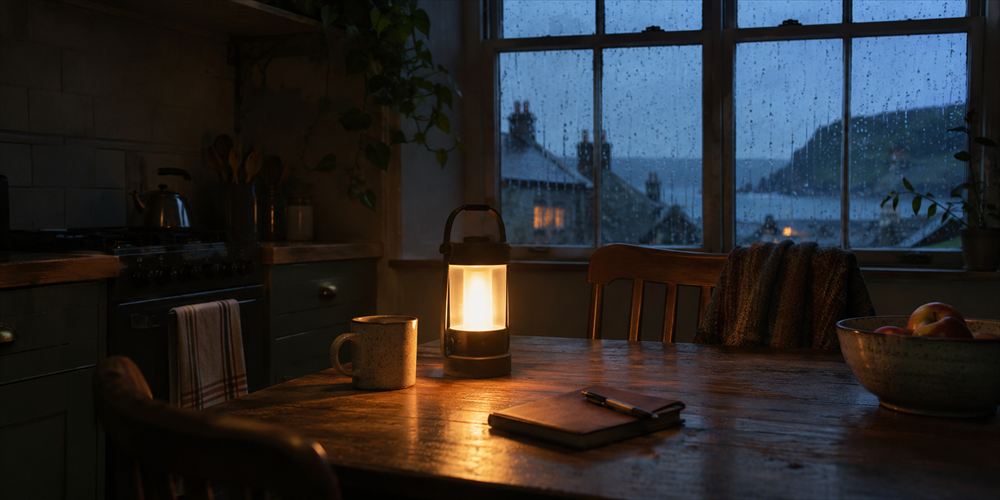
The lights go out at half past seven. The electricity network says engineers are working on the fault, with an update expected around midnight. Dinner is half cooked, a child needs to settle and the house is beginning to cool. Once a power cut extends into the evening, the useful questions change. How will you keep warm, get through the night and make contact if the phone network goes down too?
Treat the restoration time as an estimate. Get the household ready for a safe night while you still have charge and, in summer, a little daylight. You can adjust once you have better information.
1. Make the first ten minutes count
- Get a torch. Use a battery torch or lantern so you can save the phone for calls and updates. Check halls and stairs before anyone walks through them. Keep people clear of downed lines, sparking equipment and floodwater.
- Check the extent of the cut from somewhere safe. Look at nearby houses and the network operator’s map if you have data. Street lights alone can give a misleading picture. A fault affecting only your home or one circuit needs a different response.
- Report it and make a note. In England, Scotland and Wales, 105 connects you to the local electricity network operator. In Northern Ireland, call 03457 643643. Note the time the supply failed and when the operator expects to post its next update.
- Turn off equipment that could be unsafe when power returns. Check what was on before the cut, especially the hob, iron, portable heaters and cooking appliances. Leave a single light switched on as a visible signal. Follow equipment instructions where shutting it off requires a particular process.
If only part of your home is affected, check whether you have a building fault or appliance problem. If an electrical switch trips again, leave the affected circuit or appliance alone and get qualified help. Do not touch electrical equipment if it is wet, damaged or giving off heat or smoke. If someone is in immediate danger, call 999.
2. Decide whether the household can stay safely
Check people before belongings. Ask who is cold already, who needs a powered device and who might be isolated by a failed lift or door entry system. A gas boiler can also stop without electricity because its controls and pumps need power. Move people to a room you can keep warmer with layered clothing and blankets. Close curtains and shut doors to unused rooms while keeping required ventilation clear.
If someone depends on powered care equipment, use the backup procedure agreed with their clinical team or supplier. Check how long it can run, when you need to call for help and whether the safest option is a planned move while backup power remains. Follow individual instructions for temperature-sensitive medicines. A fridge thermometer for food does not tell you whether a medicine is still usable. Ask a pharmacist or care team if the medicine’s storage conditions may have been breached.
Check on someone you normally support if you can do so safely. A text with a specific offer, such as “I can bring blankets now” or “I can call the operator for you”, is easier to answer than a general message. Write down which friend, relative or official service might offer a warm, accessible place. Confirm they have power and can receive you before setting out. Check travel conditions and any advice from emergency services.
3. Keep cold food cold and plan an easy meal
Keep fridge and freezer doors closed. The Food Standards Agency gives estimates of up to four hours for a closed fridge, 48 hours for a full freezer and 24 hours for a half-full freezer. The room temperature, appliance and number of times you open the door affect how long food stays cold. Use the time the power went off and the actual thermometer reading where available to judge what to do. Consult the agency’s guidance if the cut outlasts the fridge estimate.
Set aside any half-cooked meal and check the food safety advice before deciding whether to use it. For the evening, choose food that is labelled ready to eat and was stored safely, such as crackers, tinned pulses or shelf-stable fruit. Keep a manual tin opener where you can find it. If you care for a baby, use your feeding plan and the guidance on preparing feeds safely during a disruption.
Suppose the power goes off at 6 pm and comes back at 4 am. The freezer and fridge have had very different amounts of protection. Check them separately rather than making one decision for the whole kitchen. Use the Food Standards Agency’s guidance on temperatures and refreezing. If you cannot establish that a high-risk chilled food stayed within safe conditions, discard it. A normal smell cannot tell you whether it is safe.
4. Give the household a way to check in overnight
- Save the next update. Record the time and the operator’s contact number on paper so someone else can check while you are resting.
- Send one clear message. Tell a relative where you are, whether you need help and when they should next expect to hear from you.
- Keep one phone ready. Reduce unnecessary battery use and put a charged power bank and suitable cable somewhere everyone can find them.
- Check any alarms. Find out how long building access, home security and personal alarms work without mains power. If someone relies on a digital landline or telecare system, get an individual backup plan from their provider.
Find a battery radio or another dependable way to get local updates if mobile service fails. When an outage is confirmed, agree whether the household needs a timed check overnight. A healthy adult in a warm home may simply need a torch by the bed. A person waiting for care or relying on a backup battery may need someone awake to watch the time and arrange their next step. Ask anyone taking over which part they will handle.
5. Check the essentials after the lights come back
Verify that essential devices have restarted and that any heating, care equipment and alarms are operating as expected. Follow instructions for devices that need a manual restart or an engineer’s attention. Check that nobody left a hob or heater switched on. If power returns briefly and goes again, keep the overnight plan in place until the supply is stable.
Check in with anyone who was expecting an update. Give the time the electricity came back and say whether you are staying put or travelling home. If a neighbour lent a lantern or gave you somewhere warm to wait, arrange to return the equipment once you know the fault has cleared. Refill batteries and charge devices before putting them back. Where someone left because of a care dependency, agree the conditions for a safe return with their support team. A lit hallway is a useful sign, and the equipment they rely on needs its own check.
Look at what made the evening harder. If you spent fifteen minutes finding a torch, move it to the first drawer people check. If the care phone was the only device with charge, set up a separate way to get news. If you planned to call a neighbour whose number you never saved, ask for it today. Fixing one small dependency often makes a bigger difference than adding more equipment.
ORIGINAL RESEARCH CHECKED / 9 NOVEMBER 2026
Official sources
- UK Government: Preparing for and responding to power cuts ↗
- Food Standards Agency: Food safety in a power cut ↗
- London Fire Brigade: Carbon monoxide safety ↗
- HSE Northern Ireland: Using a portable generator in an emergency ↗
Confirm the latest guidance before acting.
YOUR NEXT STEP
Build a household plan for the next outage, including the people and equipment you depend on.
Find your Exit Plan