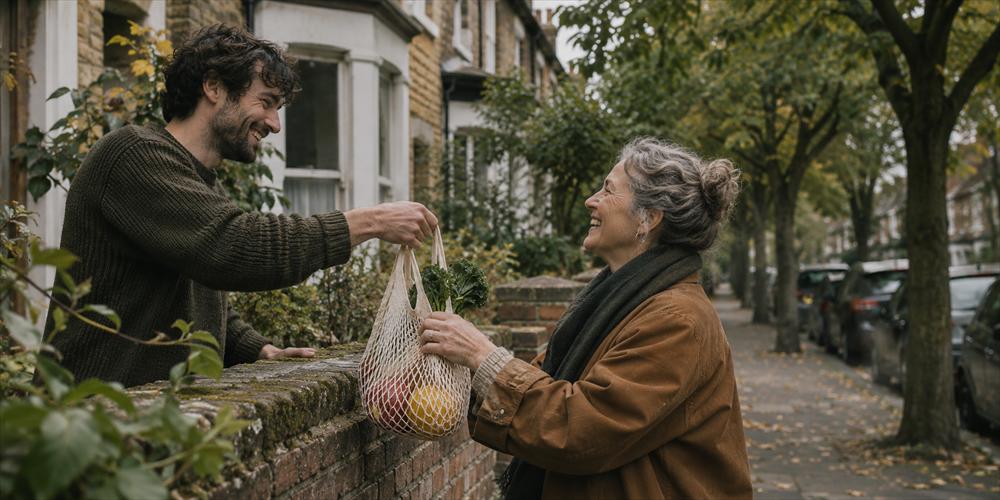
Two people on the same street can experience the same disruption very differently. A resident who drives to work hears about a road closure while listening to the radio. The person upstairs, who gets around using a walking frame, discovers it when their shopping delivery is cancelled. They may never know what to expect next unless someone shares a reliable update in a way they can receive. You can arrange that first contact over an ordinary cup of tea.
Start with a small area you already know, such as your landing, the end of a terrace or the houses around a courtyard. Focus on a few useful things neighbours can do voluntarily and safely. A contact can share verified information, offer practical help where they can and know which service to reach when the request is beyond them. Agree those roles while everyone has time to think about what works for them.
Begin with three things you can deliver
- Find out how people want to hear from you. Ask whether a knock, a call or a short text works best. Someone may prefer a handwritten note, or want you to contact a nominated person first. Get permission before sharing their details.
- Agree when a check-in would help. A conversation that starts “if the power is out at dusk” is easier to act on than a general offer. Agree who goes first and who can cover when they are away.
- Save two useful sources of local information. Write down where you would find council or emergency service updates and a local broadcaster. Decide how to pass on a relevant update to people outside any group chat.
Invite people with a clear proposal and let them choose how much to join in. “Would you like me to knock if our building loses power in the evening?” gives someone a concrete choice. Some people will want information only. Others may already have a family arrangement and want to say whom to contact if it falls through. If nobody wants to coordinate the whole street, start with two households and one reliable habit.
If your building has communal doors or a property manager, check how people would get messages in the entrance and how the manager will publish updates. Ask what happens to existing systems if there is a power or internet outage. Agree who can pass on an authorised message when the noticeboard is behind a locked door or when you cannot enter an affected part of a building.
Keep the information small and useful
A simple contact list can record a name or flat number, preferred contact method, who can use it and any practical instruction the person wants to share. “Please text first and wait for a reply” is more useful for a check-in than a detailed account of someone’s circumstances. Let people update or withdraw their details and keep the list with the people who actually need access to it. Post general arrangements in public spaces and keep individual contact details private.
Ask about access in practical terms. Can the person hear a knock? Is the message legible? Would a call in another language help? A friend or family member can act as someone’s preferred contact with their agreement. If an update concerns the whole street, use plain language and include the date, time, source and location. For example, “The council has reopened Birch Road to pedestrians from 3 pm. Its update still shows Mill Lane closed.” Make a correction in the same place if information changes.
Match offers of help to what people can safely do
- Information. One person could listen to a local radio update while another checks an official page and passes on the relevant instructions.
- Errands. If local conditions are safe, a neighbour who is already going to the shop might pick up agreed essentials. Agree what is wanted and any costs before setting out.
- Contact. Someone can offer a short check-in or help a person find the right telephone number. Keep a printed list in case your own devices are unavailable.
- Established support. Record the local groups and services people already know, such as a community centre, residents’ association or existing volunteer network. Check what help is actually operating during the incident before sending somebody there.
Keep the offers modest. One person might be available for a daytime check-in but leave for a night shift. Another may know which local service to call and have a reason to stay indoors themselves. For tasks involving specialist care, equipment or hazardous conditions, use the arrangements made with the appropriate professionals. Ask before turning a favour into a rota. People are more likely to keep an arrangement they helped choose.
Connect with groups that are already organised before you try to provide a street-wide response. Local councils and resilience organisations can signpost the arrangements in your area. A community organisation may already have a venue, a local contact or a way of checking on members. Share the existence of your small contact circle if that is useful and the participants agree. During an incident, wait for established groups or emergency services to request support and give instructions before going to an affected area.
Walk through one evening without power
Imagine electricity goes off at 5 pm. The person who normally messages the street is away, and some households lose their home internet at the same time. You have agreed that the backup contact on the ground floor checks the building manager’s update where possible and knocks on the doors that opted in. A resident replies that they can manage for now but asks whether the next scheduled update is available. The contact tells them what they know, names the source and gives a time to check back.
At another door, nobody answers. The agreed backup is a sister, who confirms that the resident is staying with her. The person making checks now knows that door needs no further visit tonight. Later, a post says the power will come back soon. The neighbour who shares information checks the network operator’s current message and reports the estimate as an estimate. That helps people make decisions without relying on a promise the operator never made.
Ask what would have broken the arrangement. If both contacts use the same locked office to find their list, move the information somewhere they can each reach securely. If a resident depends on a lift, make sure their own arrangements cover how they would get the right help if it stops. If everyone expected the same person to cover after dark, find out what that person can realistically do and choose a backup together.
Write down one agreed change and give it an owner. Check the list when someone moves or changes their contact preferences, and revisit the arrangement after using it. People need to know how to take part, whom to call and what to expect at the moment they need it. A small circle that can deliver a check-in and a trustworthy update is a good place to begin. At the next check-in, ask each participant how they would reach their backup without the usual messaging app. If somebody has no answer, record a second agreed route.
ORIGINAL RESEARCH CHECKED / 9 NOVEMBER 2026
Official sources
- GOV.UK Prepare: volunteering and helping others ↗
- GOV.UK Prepare: information for communities and community groups ↗
- GOV.UK Prepare: getting ready for emergencies ↗
Confirm the latest guidance before acting.
YOUR NEXT STEP
Map the people and services your household would turn to if your street lost its usual connections.
Find your Exit Plan