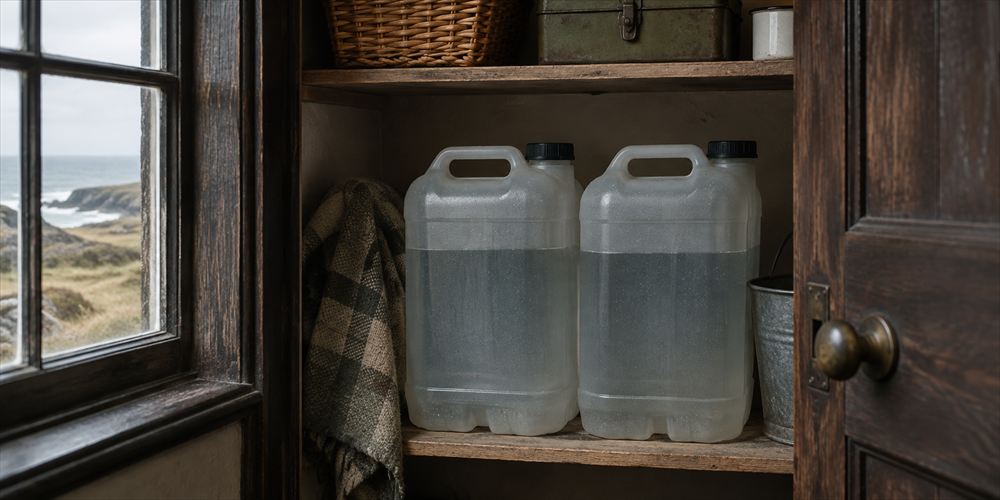
A household with three people might put six bottles of water in a cupboard and assume the problem is solved. If those are one-litre bottles, that is six litres in total. Under the UK government’s Be Ready planning figure of three litres per person per day for drinking, the same household would set aside nine litres for a day and 27 litres for three days. Cooking, washing, pets and any particular care needs are separate.
The useful question after doing the arithmetic is whether the people who live there can find, lift and use the supply. A modest amount you can reach safely gives you time while you build the full reserve. Start with the space you have and adapt the plan as your household changes.
Work out a starting quantity
- Count the people who could be at home. Include someone who stays regularly, such as a child who splits time between homes. Add guests if they will be there during a known interruption.
- Use the three-day drinking figure. Multiply the number of people by three litres and then by three days. One person’s starting reserve is nine litres, two people’s is 18 litres and four people’s is 36 litres.
- Estimate your other essentials. Work through pets, baby feeding, handwashing and meals that need water. Ask a care team what your household should keep if anyone relies on water for a medical device or follows a specific fluid plan.
- Plan how to top up. Write down your water company’s contact details and find out how it announces collection points. Think about who could collect for you if carrying water or getting there is difficult.
The government’s storage figure is for planning. A person’s drinking needs vary with their health, activity and the weather. Discuss a care plan with the relevant clinician if someone has individual hydration instructions. For pets, use their normal intake as your starting point and ask a vet about particular needs. Ready-to-eat food can also make your reserve last longer because there is less water to use for cooking and washing up.
Choose a place people can actually reach
Store sealed drinking water in a clean, cool place away from direct sunlight and chemicals, following the packaging instructions. A low, sound shelf can work better than the top of a cupboard. A litre of water weighs about a kilogram before you count its packaging. Eighteen litres stored together are a load worth planning for. Check that a shelf can take it and avoid creating a trip hazard in a passage or on an escape route.
Spread the supply across two sensible places if space is tight. Put the bottles you would open first at a height you can reach comfortably. Consider a few small bottles if people in your household have trouble lifting a large container. If your home has a flood risk, select a place that keeps sealed water above the likely water level while still being accessible. A damp floor beside a door is a poor place for the entire reserve even if a case fits there neatly.
- Small flat. Divide cases into smaller groups and use two cupboards. Keep enough in each place to avoid pulling everything out during an interruption.
- Shared house. Agree which stock is shared and who replaces it. Set a shelf for the reserve so an ordinary weekend doesn’t use it up unnoticed.
- Household with limited lifting ability. Try the bottles you intend to buy. Check that the person who will use them can open, move and pour from one. Add a nominated contact who can help with a larger delivery.
- Home with an outdoor water butt. Plan how you could use that water for tasks like flushing if appropriate. Keep it separate from water for drinking, food preparation and toothbrushing.
Choose sealed bottled water for the reserve and check its date periodically. Rotate stock into ordinary use as needed, bringing older bottles forward and replacing them. Check the cases for leaks and make sure nobody has moved them behind equipment that blocks access. A phone reminder every six months can fit the same routine you use to review food, batteries and household contact details.
Act on the type of water notice you receive
A dry tap and a safety warning call for different decisions. If supply is interrupted, check your provider’s updates for the expected repair, alternative supplies and instructions for your address. Where collection points are offered, check opening times, what to bring and how much you can carry. If you need extra help, contact the provider and check eligibility for its Priority Services Register. A neighbour may also be able to collect supplies if they have agreed to do so and can do it safely.
A boil-water notice gives directions for making tap water suitable for the uses listed by your provider. Read the notice itself and follow the advice on drinking, food preparation, brushing teeth, ice and feeding animals. A do-not-drink or do-not-use instruction can require a different response. Use the specified alternative and keep following the notice until your supplier or local authority lifts it. People using private supplies can contact the local authority about an issue affecting their water.
Plan separately for baby feeds. Official UK advice identifies ready-to-feed formula as the safer option during an outage if that is what your baby uses and boiling water or sterilising feeding equipment is difficult. If you normally use powdered formula, consult NHS and government guidance for your situation and have an answer before the water stops. For powered or water-dependent care equipment, rely on the instructions your care team has given you.
Try the plan for one evening
Keep normal supplies available, then imagine the kitchen tap has stopped working at five in the afternoon. Where would each person get a drink? Which meal can you make with the water and cooking facilities you have? How would you wash your hands and look after any pets? Check what you have put on your shelf against what you would use. You may find the amount you bought is reasonable but the evening’s dinner needs several litres you never counted.
Give someone else the task of locating the supplier’s contact and finding the second store of bottles. If they need your phone or a key they cannot reach, change the plan. Work out how you would collect an emergency supply if it were at a local car park while you were at work or unable to drive. Record one realistic person or service you can ask for help. Where nobody is available, contact the supplier ahead of time to understand its support arrangements.
Notice what else depends on water in your home. A washing machine and dishwasher can wait, but a person who needs help with toileting may need an agreed routine and supplies from the first hour. If you live in a building with shared facilities, ask the manager what information they will post when a fault affects only the building. Keeping their number alongside the water supplier’s can save time when the rest of the street still has water.
Leave the household with a clear total, two storage locations if needed, and a date to check the stock. On an ordinary shopping trip, add a few bottles until you reach the amount you worked out. The result should fit into the home and the routines you already have, so the water will still be there when you need it.
ORIGINAL RESEARCH CHECKED / 9 NOVEMBER 2026
Official sources
- UK Government: Preparing for a water supply interruption ↗
- Drinking Water Inspectorate: Instructions during a boil-water notice ↗
- Ofwat: What to expect during a water supply interruption in England and Wales ↗
- NHS: Water, drinks and hydration ↗
Confirm the latest guidance before acting.
YOUR NEXT STEP
Make room in your household plan for drinking water, supply contacts and anyone who needs extra help.
Find your Exit Plan