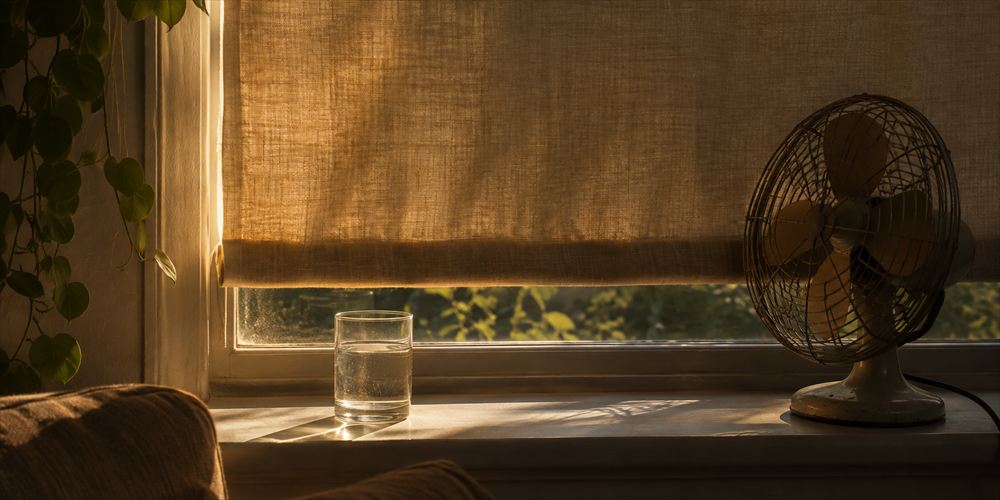
The day’s heat has passed outside, but your bedroom is still warm at midnight. The only window faces a busy road and you need a safe way to let cooler air in. Heat planning for a home without air conditioning is about using shade, timing and the rooms you have, with a second place to go if the home cannot cool enough.
Start during an ordinary warm day. Find where the sun hits first, which room stays usable longest and what makes opening windows difficult. Then plan how you will stay comfortable through the following night. The options that work at noon can be different from those that work after dark.
Map which parts of the home heat up
- Follow the sun. Note which windows get direct sun in the morning and afternoon. Close existing blinds, curtains, shutters or shades on the windows receiving it during the hottest part of the day.
- Find a cooler room. Compare rooms during the afternoon and evening. A room shaded by another building or on a lower floor might suit someone who needs to rest or sleep there.
- Plan when you can ventilate. UKHSA advises opening windows when the air outside feels cooler than inside, where it is safe. Think about child safety, security, noise and any building restrictions.
- Reduce extra heat. Turn off unused lights and equipment, check that heating is off and plan meals or chores that produce less heat in the hottest room.
If you use a thermometer, record the temperature at the times you use each room and compare it with conditions outside. Use those readings to decide when to switch rooms or ventilate. A room with lots of morning sun may be usable later, while a west-facing bedroom can stay warm after sunset. A simple note is enough to establish which room you would choose for each part of the day.
For a top-floor flat with windows on one side, make an evening plan before the hottest day arrives. Ask whether existing blinds work and whether you can move a sleeping setup temporarily. If windows cannot be opened safely, check which local indoor places stay cooler and when they open. Agree how to get there before someone needs to cool down.
Use a day and night routine
- Early morning. Check the forecast and local alerts. Do physical tasks when it is cooler if you can. Put drinking water within reach and move items you will need to the cooler part of the home.
- During the hottest hours. Close shading on windows in direct sun and move people to the coolest usable space. Follow UKHSA guidance on fans. It advises using them below 35°C and avoiding pointing them directly at the body.
- Evening. Open windows where safe when the air outside is cooler. Check the room you plan to sleep in and set up a cooler alternative if needed.
- Overnight. Keep water and a charged phone accessible. If someone needs help to move or change rooms, agree who can assist and how to contact them.
Plan around people’s normal routines. Someone who works nights may need a cooler place to sleep in the afternoon. A parent may need a safe play space away from the windows and direct sun. A person living alone may prefer a scheduled call before the hottest part of the day and a second check in the evening. Agree what to do if they miss the call and who could visit safely.
Keep drinks available and follow official health advice on staying hydrated. Ask a relevant clinician about anyone with specific fluid limits or a condition that changes what they should drink. Check medication storage directions and ask a pharmacist what to do if heat may have affected a product. Do not improvise storage based on a general article about food or water.
Plan an alternative to staying in the hottest room
Choose a location you can use before you are uncomfortable. A shaded home belonging to someone you know, a nearby library or another suitable public building may work. Check opening times, accessibility, toilets and travel in hot weather. Tell a trusted person where you are going and when you expect to check in. If somebody needs a care device or medication, check how it can be used or stored at the destination.
A backup can be useful even when the building is only hot for a few hours. For example, a household could arrange to spend the afternoon at a relative’s, then open windows safely after outdoor temperatures fall. Agree who will help get someone there if they find travel difficult. If the plan relies on one particular lift or bus route, ask what the fallback is if it is unavailable.
Think about the trip itself. A cool building a short walk away may be more useful than a distant destination that requires waiting at an exposed stop. Check where you can pause in shade and whether the person travelling will have a seat and water when they arrive. For a child or adult needing assistance, agree who will travel with them and make sure the place can meet their needs. Consider spending the busiest part of the day there before the home has heated up.
Make a check-in specific enough to act on
Ask the person what would help. They may want someone to bring water to the room they use, check whether a blind is working or accompany them to a cooler place. Agree a time to call, and identify who can visit safely if they miss it. Where someone already receives care, ask the care provider how the arrangements change during a heat alert. Keep the numbers somewhere that can be found without an internet connection.
Use plain words in a message. Say when you expect the room to be hottest, where the person can go, and what to do if they are feeling unwell. A check-in before the usual evening call gives both of you more time to arrange a safe change of place. Make sure everybody knows who is covering the next contact.
Make changes you can repeat next time
Record what helped and what was hard. Maybe the blackout blind covered one window but left the room uncomfortable because the equipment next to the desk was running all afternoon. Perhaps one neighbour could provide a cooler space but needed a way to receive a message. Move the useful changes into your normal routine and note which steps depended on outside help.
If you rent, discuss practical improvements such as suitable shading or safe ventilation with the landlord before fitting anything. Ask about window restrictions and whether any changes would affect fire safety or the building’s rules. Where someone’s health is especially sensitive to heat, seek advice about how to plan before the next hot spell.
Write the routine in a form someone else can follow. Name the coolest room, when to open or shade particular windows and the location you can use if the home remains too hot. Add a contact for anyone who needs help and agree when to review the plan. Test it during a warm spell while you still have time to make changes.
ORIGINAL RESEARCH CHECKED / 9 NOVEMBER 2026
Official sources
- UK Health Security Agency: Keep cool at home checklist ↗
- UK Health Security Agency: Staying safe in hot weather ↗
- NHS: Heat exhaustion and heatstroke ↗
- Met Office: Hot weather and its impacts ↗
Confirm the latest guidance before acting.
YOUR NEXT STEP
Choose the coolest place you can reach and put your household’s hot-weather decisions in one plan.
Find your Exit Plan