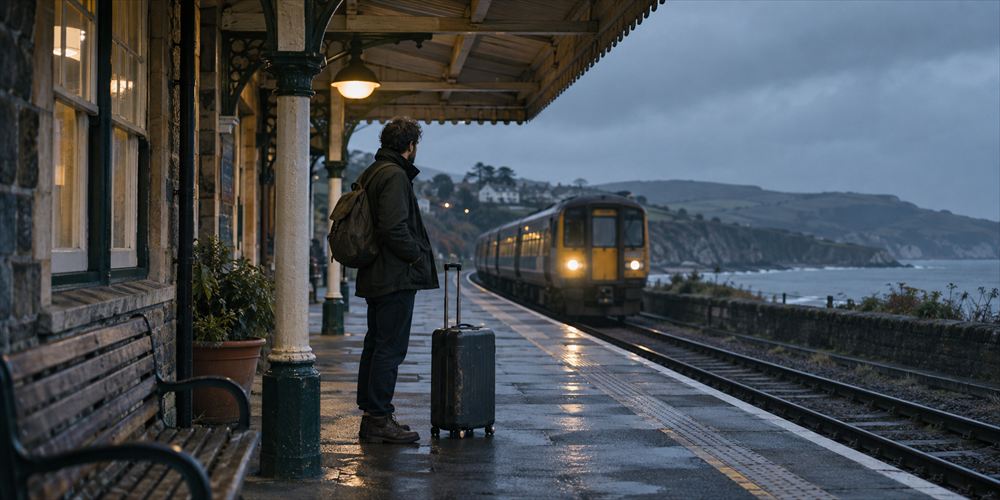
You have been told it is time to leave. The bus stop at the end of the street is inside a road closure, the nearest rail station has steps and you have a child, a bag and nowhere confirmed for the night. You need a safe first leg more than you need an exact journey to a distant address. A car-free evacuation plan works in stages. Get to safety using the route you are told to take, then establish where you can wait or stay.
Build the plan around what is realistically available at different times. Some households can walk to a relative’s home. Others need accessible transport, a support worker or a local authority’s assistance. Work through the arrangement while transport and phones are working normally.
Separate leaving the property from travelling across town
Find your building’s emergency procedure and learn which routes apply to you. In a managed block, ask the responsible person how people are alerted and what support is available to anyone needing assistance. For an instruction to evacuate a wider area, follow directions from emergency services or the local authority. Ask where to go and which routes are safe to use. A pre-planned stop or route may be unusable in the actual incident.
Agree an immediate place to wait if you can safely reach it. Pick a recognisable location clear of emergency access. Think about weather, lighting, shelter and whether someone can stay there for longer than a few minutes. Then choose a further destination with an agreed host or another option you can check at the time. Get its address, the name of the person who can receive you and the opening or access arrangements.
Map two routes that work at the pace of your household
- Plot the nearest safe exit. Use routes appropriate to your building and local area. Find where the stairs, ramps and accessible entrances lead. Ask the building manager before counting on a lift during an incident.
- Check the first crossing or connection. Walk it if safe and suitable. Note kerbs, gradients, crossings, pavement gaps and places to rest. Identify an alternative if a bridge, underpass or station is out of use.
- Write down transport options. Record a bus or rail route, a taxi or community transport contact if available, and one other possibility. Check which ones operate at night or can take the people and equipment travelling.
- Verify help in advance. Ask a person who may assist when they can help, what they can carry and whom to contact if they are unavailable. Make support arrangements with the person concerned.
- Keep one usable copy offline. Put the route and contact details on paper or save them to a device you can open without a signal. Share a copy with the people who need it.
A short route on a map may be a long trip with a mobility aid or a small child. Plan rest points and identify where a pavement ends or a gate locks. Think about what you can manage in the dark, in rain or carrying only what is essential. If an official closure affects the route, ask for a safe alternative before moving. A few minutes spent checking can prevent a walk into a blocked area.
Check who can get on each form of transport
Ask the operator what step-free access or passenger assistance is available on your likely routes. In Great Britain, train and station operators’ accessible travel policies set out their arrangements, including help during disruption. Check the station, the train or replacement vehicle and the route between them. If your plans depend on a particular device or lift, ask what happens when it fails. Save the operator’s assistance number alongside any booking details.
- A wheelchair or scooter. Have the dimensions and any relevant transport requirements to hand. Ask a taxi or other operator what vehicle they can provide and how you would board it.
- A child and buggy. Check whether the expected stop has a safe place to wait and whether the route includes steps. Decide what can be carried if the buggy cannot take the whole load.
- An assistance dog or pet. Check transport and accommodation arrangements, and have a lead, harness or suitable carrier where it can be reached safely.
- A person who travels with support. Agree who will be there, how to reach them and whether care and equipment can continue at the destination.
If you need help to leave, find out how your local emergency planners and building manager want residents to raise access needs. Tell responders early about any time-sensitive care, access or communication requirement in an incident. Give the exact address, floor and entrance, describe the help you need and follow their advice. Where one nominated neighbour cannot help, have a second contact or an arrangement with an appropriate provider.
Make the journey manageable with what you can carry
Use a light bag for the essentials you may have time to take, such as a contact card, charger, appropriate medicine, water and a warm layer. Follow your evacuation instructions and leave belongings behind if collecting them would delay escape. Keep a hand available where you need it for a rail, stick or buggy. Store documents securely and know how to retrieve a copy if you reach safety without the bag.
Suppose the bus route fails after dark. You can walk to a staffed place nearby and wait safely while a relative checks whether a taxi that meets your access needs is available. Your fallback number is on paper, so you can ask to make a call if your phone is out of charge. The plan works because the first leg, the wait and the next leg each have a practical option.
Plan how to pay, check in and come back
Check how you would pay for the journey if your phone cannot display a ticket. An ordinary payment card, a printed ticket where supported or a small amount of cash may be useful. Confirm which options your usual services accept and where you would find a working ticket machine. Keep what you can afford securely and with the person travelling. Put the host’s address on paper so you can explain the destination without opening a map or handing over a phone.
Agree who will check that you arrived. Give them the expected route and a time to expect an update, then tell them if your route or destination changes. Think about the journey home as a separate stage. Wait for instructions before returning to a closed property or area. Confirm that the route and the building are usable again, and that any lift or assistance you need is available. If you need to stay another night, make that decision while your host or another source of help can still be reached.
Try the first stretch on an ordinary day, or talk it through with the person who would travel. Confirm what you would do if there is no signal, the person offering a lift is away or the only available service stops at a different station. Record the most realistic fallback and review it when routes, health or household needs change. Keep the first destination and assistance number easy to find so the details are usable when plans change quickly.
ORIGINAL RESEARCH CHECKED / 9 NOVEMBER 2026
Official sources
- UK Government: Household emergency and evacuation planning ↗
- UK Government: Emergency planning for disabled people and carers ↗
- UK Government: What to do before or during a flood ↗
- UK Government: Rights of disabled passengers on transport ↗
Confirm the latest guidance before acting.
YOUR NEXT STEP
Put your routes, transport options and assistance contacts in a plan you can use on the move.
Find your Exit Plan