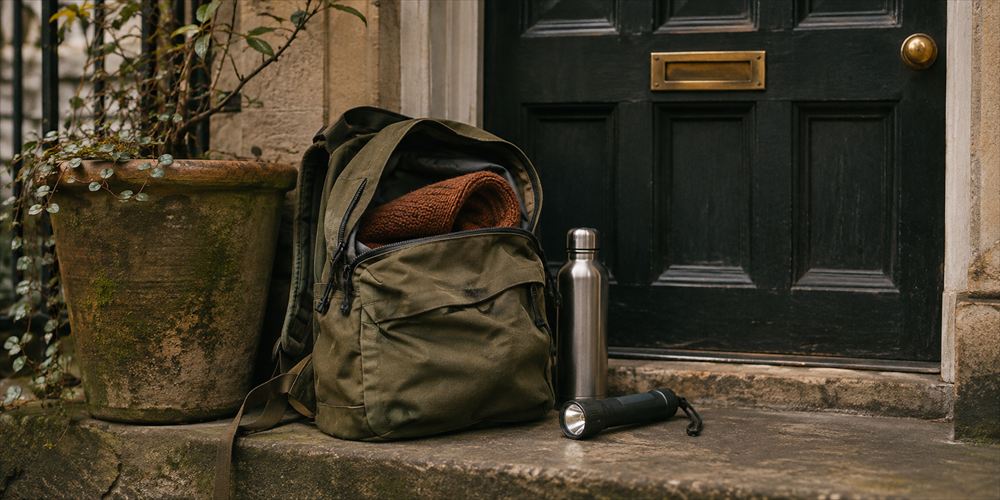
You live on the fourth floor. A water leak makes your flat temporarily unsafe and the building manager asks people to leave by the stairs. You have time to put on shoes and pick up a bag. Once outside, you still need to reach the person who can let you stay, get the correct medicine at the right time and explain your situation to the building manager. The bag is for those practical jobs.
In a city flat, space and carrying capacity do more to shape a kit than a long packing list. A small bag works if you can carry it safely while using a handrail, pushing a buggy or guiding a child. Most households can start with a spare bag and equipment they already use. Try lifting it before you add anything heavy.
Check the building’s plan before you pack
Find the building’s current fire instructions and ask the building manager about the procedure for your flat. The arrangements depend on the building. A converted house can have a different strategy from a purpose-built block. Ask which exit routes apply, whether there is an evacuation plan for anyone needing assistance, and how the building communicates a change to its strategy. Keep the manager’s contact details separately from any emergency number you would use for an immediate threat.
Decide where you would go during a planned evacuation or short absence. A neighbour in the same block might be affected by the same incident. Ask a friend or relative outside the building whether you could go there, and find a second option. Know how you would get there if the normal station was closed or the lift was unavailable. If you live with other people, agree where to meet safely and who can pass on a message if you are apart.
Pack for the first few decisions
- Start with contact and access. Put in a paper card with your address, an emergency contact, the building manager and the person you could stay with. Add keys only where you can store them securely. A list of useful numbers is enough to start.
- Cover everyday care. Write down essential medicines and the correct strength as shown on the label. Keep a copy of the prescription if appropriate and arrange safe transport and storage with a pharmacist. Add essential personal items such as glasses or hearing-aid supplies.
- Provide light and warmth. Include a small torch and a layer that fits the season. Think about the time you might spend outside waiting for information. A light rain layer may do more for you than an extra day of bulky clothing.
- Put charging and payment in reach. Add a suitable charging cable, a charged power bank if you have one and a small amount of cash if you can spare it. Keep a card on you and protect it as you normally would.
- Allow for the journey. Take a manageable bottle of water and a familiar ready-to-eat snack if space allows. Pack for the distance you expect to walk and the things you would need before reaching your destination.
Use pockets you can identify without emptying the bag. Put the contact card and torch in the first pocket you would check. Keep dry clothes separate from any bottle that could leak. Use a pouch for the cable and charger, and check it fits your actual phone. A clipped-off list of things to take only if you have time can cover the items you use every day, such as your phone and medication.
Adapt it to the people who live there
- With a child. Choose a small comfort item and enough supplies for the journey, such as nappies and wipes. Pack a familiar snack that fits their age and dietary needs. Work out what the adult carrying the child can safely manage.
- With a pet. Keep a suitable lead or carrier accessible and plan who can help if you cannot manage both the animal and the bag. Ask your host or accommodation provider whether the animal can stay.
- With mobility or sensory needs. Make the packing and route decisions with the person concerned. Ask the building manager and relevant support team how evacuation assistance would work. Consider a bag that suits the person’s own way of moving.
- When several adults share a flat. Give each person a way to contact others if the shared bag is taken by someone else. Agree who will carry any common items and which items belong with a particular person.
People sometimes pack for the wrong location. A compact kit kept at home cannot help someone who is already at work when their building closes. That person still needs a usable contact card, a way to charge their phone if possible and somewhere to wait. Decide which information everyone should carry on an ordinary day. Keep a second copy of important details somewhere secure and accessible if the flat is out of bounds.
Store it close to the route and keep the contents current
Choose a place inside your flat where the bag is reachable and will not obstruct the doorway or shared escape routes. Pick somewhere clean and dry, away from a heat source and beyond the reach of young children if it holds small items or medicines. Tell anyone who might need it exactly where it is. A coat cupboard near the door can work if it opens easily and the bag will not get buried behind seasonal gear.
Consider what you would be comfortable leaving in the bag. Insurance contacts, reference numbers and selected document copies may help, but a bag can also be lost or stolen. Keep originals and sensitive records securely, and carry only the information you would need in the first hours. If a copy is necessary, store it thoughtfully. Avoid putting passwords or unrelated records in the pack.
Make an arrangement for a second night if you cannot get back into your flat. The bag only needs to get you through the first part of that disruption. A friend might lend you clothes or let you charge a device. A building manager might organise a time to retrieve essential belongings once the building is safe. Check where they will post updates and who you would call about repairs or insurance. That gives you a way to restock without trying to carry every useful thing down the stairs.
Walk to the first safe point on your route with the bag on a normal day. Use the stairs if they are part of your plan and you can do so safely. Check whether you can open doors, use a handrail and keep the other hand free. If the bag is heavy, remove the items you can get at your destination. If a medicine, support device or pet arrangement is the hardest part, work on that dependency first.
Review the bag at a change of season or whenever someone’s needs change. Recharge and inspect equipment, replace expired supplies and check the phone numbers. Then explain the plan to the person who is least familiar with it. They should know which things to take when there is time, which route to use and when the right decision is simply to leave.
ORIGINAL RESEARCH CHECKED / 9 NOVEMBER 2026
Official sources
- UK Government: Be Ready household checklist and grab bag ↗
- Barnet Council: Emergency grab bag ↗
- London Fire Brigade: Escape plans for houses and converted flats ↗
- London Fire Brigade: Fire strategies for purpose-built blocks ↗
Confirm the latest guidance before acting.
YOUR NEXT STEP
Put your exit route, bag and first place to stay on one household plan.
Find your Exit Plan